The global circuit breaker analyzer market is steadily expanding at a compound annual growth rate of approximately 5.0%, and is expected to reach a market size of 539 million US dollars by 2032. Behind the growth of the market is the increasing demand for refined assessment of circuit breaker status in the power industry. However, facing the numerous choices in the market from portable single function testers to integrated analysis systems, how to choose the truly applicable equipment is still a practical problem faced by many power operation and procurement personnel.
In the view of Wuhan UHV Power Technology Co., Ltd., the selection decision of circuit breaker analyzers should start from the tested equipment itself. This enterprise, which has been deeply involved in the field of high-voltage electrical testing for 22 years, has a product system covering 15 major categories of products such as circuit breaker testing, series resonance testing devices, and relay protection testing. Based on extensive on-site application experience, the company's technical team has formed a basic judgment: discussing selection without considering the type of circuit breaker and testing tasks can easily lead to either insufficient functionality or excessive configuration of the equipment.
Time accuracy is the core bottom line
The most commonly mentioned indicator in selection discussions is time measurement accuracy. An engineer with ten years of experience in circuit breaker testing pointed out that a qualified analyzer should be able to achieve a time resolution of 0.1ms synchronously on at least 12 faults. This requirement is not strict - in the synchronization verification of three-phase SF6 circuit breakers, a deviation of 2ms may mean that the equipment needs to be shut down for maintenance.
The technical specifications of the Wuhan UHV-412 circuit breaker analyzer confirm this standard: 12 channel synchronous timing with a time resolution of up to 0.01ms and a measurement accuracy of 0.05% ± 0.1ms within 1000ms. Finer resolution means that weaker timing anomalies can be captured on site, providing more sufficient basis for state assessment.
The sensor configuration should be matched with the circuit breaker mechanism
Speed and travel measurement is another easily underestimated link. The requirements for sensors vary significantly among different types of circuit breakers: vacuum circuit breakers typically require a linear sensor with a resolution of 0.1mm and a range of 50mm, while SF6 switchgear stroke measurement often requires maintaining a resolution of 1mm over a range of 300mm.
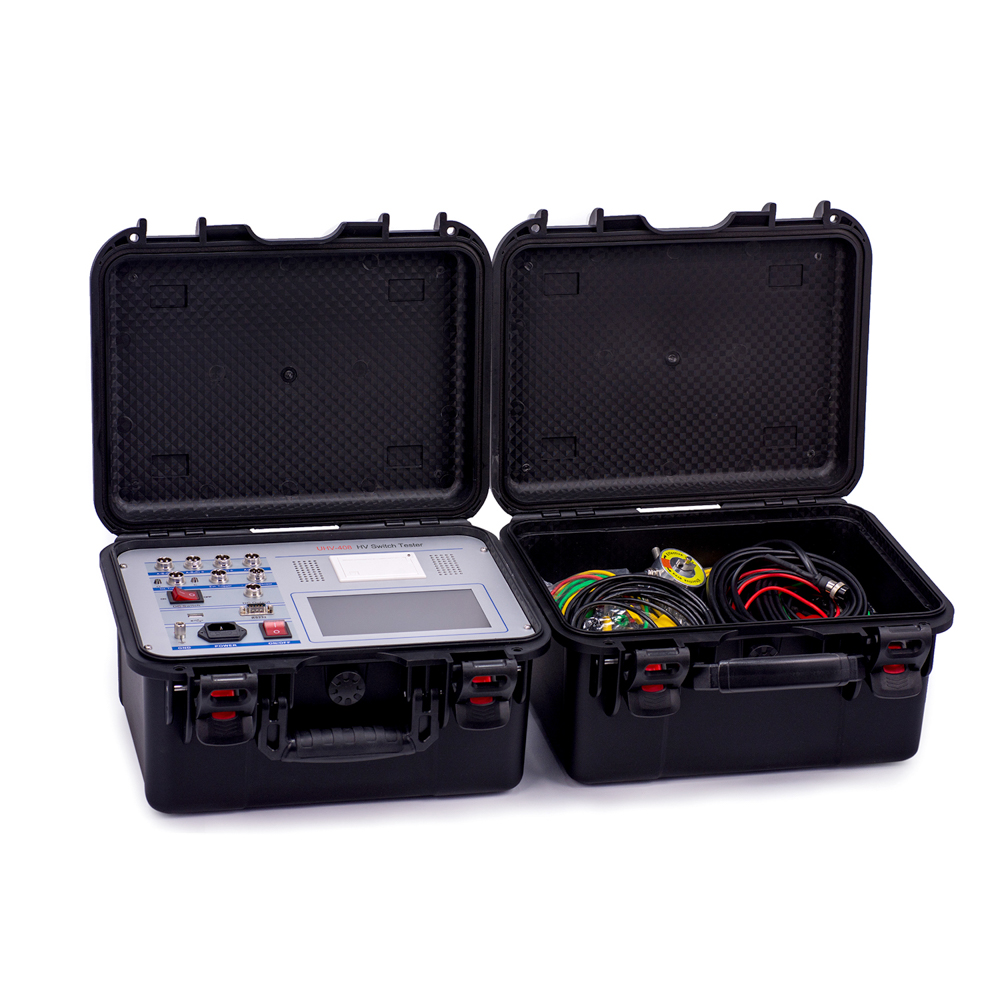
The Wuhan UHV-406 high-voltage switch dynamic characteristic tester provides a flexible solution in this regard: it supports linear sensors, angle sensors, and optional laser sensors, with a speed measurement range covering 0.01 to 25.00m/s and a stroke measurement accuracy of ± (1% L+0.2) mm. This instrument can simultaneously measure the fracture of 12 metal contacts, 6 closing resistances, and 3 graphite contacts, and is suitable for mainstream SF6 switches, GIS composite appliances, vacuum switches, and oil switches at home and abroad.
Anti interference capability is a hard constraint for on-site use
The electromagnetic environment at the substation site is much more complex than in the laboratory. In 500kV or even 800kV substations, electromagnetic interference generated by switch operations may cause measurement data jumps or even instrument crashes. The internal anti-interference circuit design of Wuhan UHV-406 UHV can meet the reliable use requirements in 800kV substations. The host can store 30000 sets of test data and support USB export.
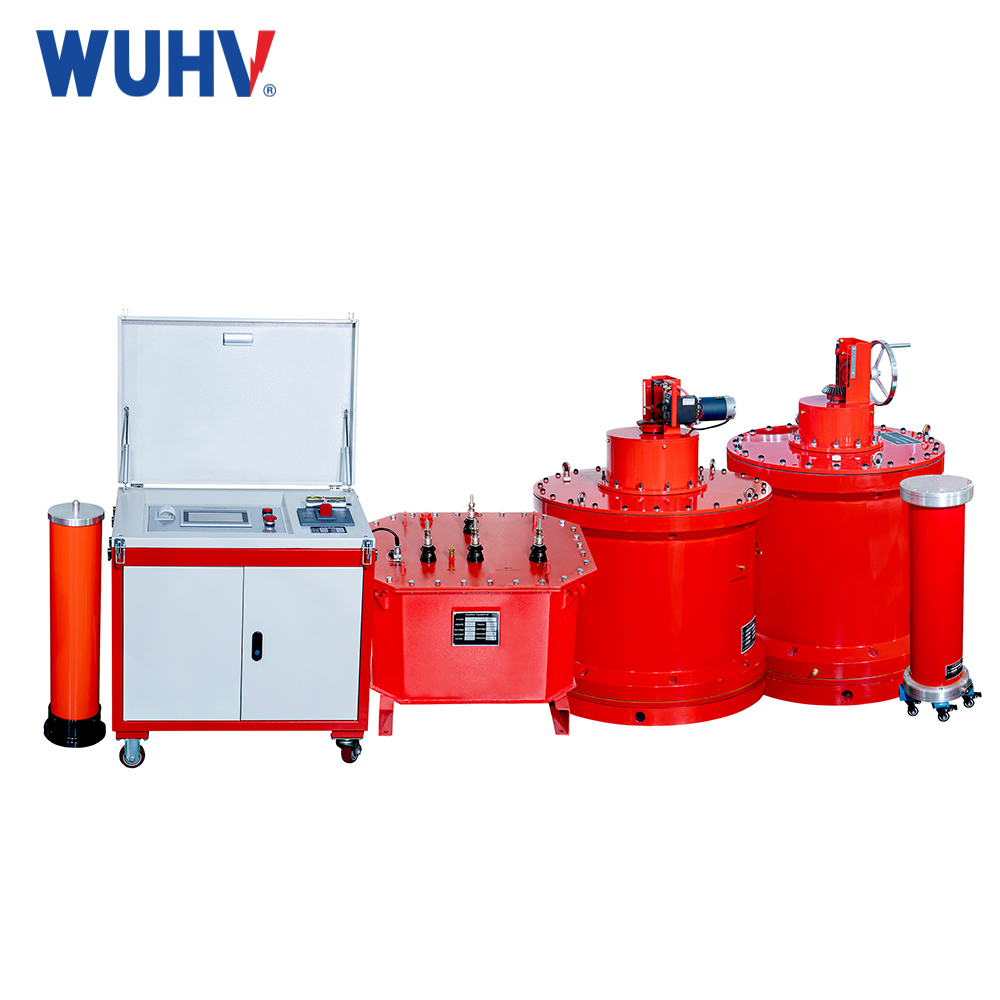
This ability has been validated in practical projects. At the factory test station of a certain switchgear manufacturing plant, the high current generator of Wuhan UHV is used for the temperature rise test of a new type of vacuum circuit breaker. It is required to pass 1.1 times the rated current to the main circuit of the circuit breaker, and the testing environment also faces the challenge of high electromagnetic interference.
Derive instrument form from testing tasks
The technical article of Wuhan UHV points out that the selection of a circuit breaker characteristic tester needs to first consider core parameters such as measurement accuracy, sampling rate, number of channels, and anti-interference ability, which directly determine the accuracy of the test results. But conversely, the selection criteria for these parameters should be determined by specific testing tasks: whether it is time travel baseline recording during routine maintenance or deep diagnosis after faults? Is it a single break medium voltage circuit breaker or a multi break series connected high voltage equipment? The test object and purpose determine the required number of channels, sensor types, and data management capabilities.
The essence of selecting a circuit breaker analyzer is to find the most economical match between "what to measure" and "how to measure". For power operation and maintenance units, the value of an analyzer that matches their own equipment system lies not in how beautiful the numbers on the parameter table are, but in providing reliable answers for every on-site test.