In the power system, high-voltage cables play a crucial role as the "arteries" that transport electricity. Like any complex device, high-voltage cables can also malfunction. Once a malfunction occurs, it not only affects the stability of power supply, but may also pose safety hazards. Timely and accurate identification of the fault point is the key to ensuring the safe operation of the power system. What factors can affect the accuracy of high-voltage cable fault detection?
The 'behind the scenes' driving force that affects fault detection
The characteristics of the cable itself: High voltage cables of different materials and structures will also have different electrical characteristics for faults. For example, faults caused by insulation aging, mechanical damage, overheating, and other reasons may have different signal characteristics.
Fault types: There are various types of faults in high-voltage cables, including grounding faults, short circuit faults, and disconnection faults. Different types of faults have different causes and signal characteristics, which directly affect the judgment of the detector.
External environmental interference: High voltage cables are usually buried underground, and the surrounding soil moisture, conductivity, and the presence of other underground pipelines (such as water pipes, gas pipes) may interfere with the detection signal, reducing the accuracy of cable fault location.
The accuracy and operation of instruments and equipment: Of course, the accuracy and sensitivity of the high-voltage cable fault detector itself, as well as the professional level and experience of the operators, are also crucial. An instrument that is not sensitive enough or an improperly operated process can lead to misjudgment or missed judgment.
Wuhan UHV Power Technology Co., Ltd.: Providing Guarantee for Precise Detection
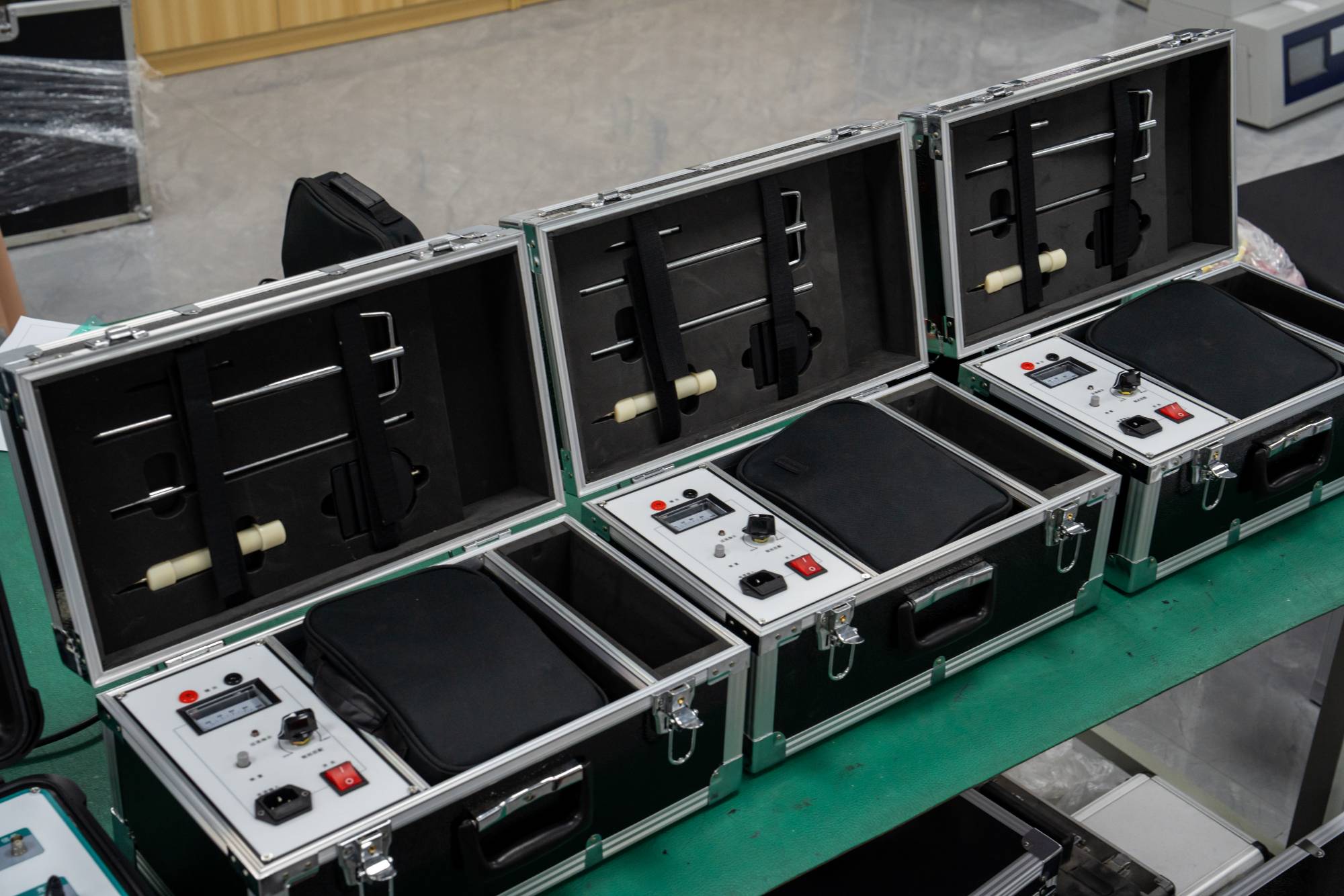
Faced with these complex influencing factors, choosing a high-voltage cable fault detector and mastering its usage method proficiently is the only way to improve detection accuracy. Wuhan UHV Power Technology Co., Ltd. is committed to researching and producing high-performance power detection equipment, providing reliable solutions for users. The equipment they produce fully considers the detection requirements under various complex working conditions in its design, which can effectively reduce external interference, improve the signal-to-noise ratio of signals, and achieve more accurate cable fault diagnosis.
How can we do better?
To improve the overall level of high-voltage cable fault detection, we can start from the following aspects:
Equipment upgrade and optimization: Continuously update and improve the technology of high-voltage cable fault detectors, enhance the intelligence level and anti-interference ability of the instruments.
Technical personnel training: Strengthen professional skills training for operators to enhance their understanding and application of various types of faults and detection methods.
Data analysis and accumulation: Establish a comprehensive fault database, continuously optimize detection algorithms through big data analysis, and improve the accuracy of fault cable location.
Joint detection: When conditions permit, multiple detection techniques (such as acoustic testing, electromagnetic induction, etc.) can be combined for joint detection to mutually verify and improve the reliability of cable fault detection.
High voltage cable fault detection is a highly technical task that is influenced by various factors. By selecting advanced power fault detection equipment, such as high-quality products provided by Wuhan UHV Power Technology Co., Ltd., and combining professional operation and continuous technical optimization, we can more effectively respond to challenges and ensure the safe and stable operation of the power system.
Frequently Asked Questions (FAQ)
Q1: What are the most common types of faults in high-voltage cables? A1: The most common types of faults in high-voltage cables include grounding faults, short circuit faults, wire breakage faults, and insulation breakdown.
Q2: What is the working principle of the detector? A2: High voltage cable fault detectors typically use principles such as electromagnetic induction, sound wave propagation, or electrical signal reflection to determine the location of cable faults by transmitting and receiving signals.
Q3: Will humid weather affect high-voltage cable fault detection? A3: Yes, humid environments, especially soil moisture, can change the conductivity underground and may interfere with the signals of certain detection methods, affecting detection accuracy.
Q4: How to choose a high-voltage cable fault detector that suits your needs? A4: When selecting, it is necessary to consider the type of cable, burial depth, common types of faults encountered, and requirements for accuracy. Consulting with professional manufacturers such as Wuhan UHV Power Technology Co., Ltd. would be very helpful.
Q5: Apart from using a detector, are there any other methods to assist in determining high-voltage cable faults? A5: It can be combined with historical operating data, insulation monitoring systems, and even traditional excavation inspections (as a last resort) for auxiliary judgment.