In the grand picture of safe operation of the power system, the grounding system plays a crucial role. The importance of digital grounding resistance measuring instruments as a key tool for detecting the reliability of grounding systems is self-evident. What exactly is it? Why is it so crucial? How can we better utilize it to ensure power safety?
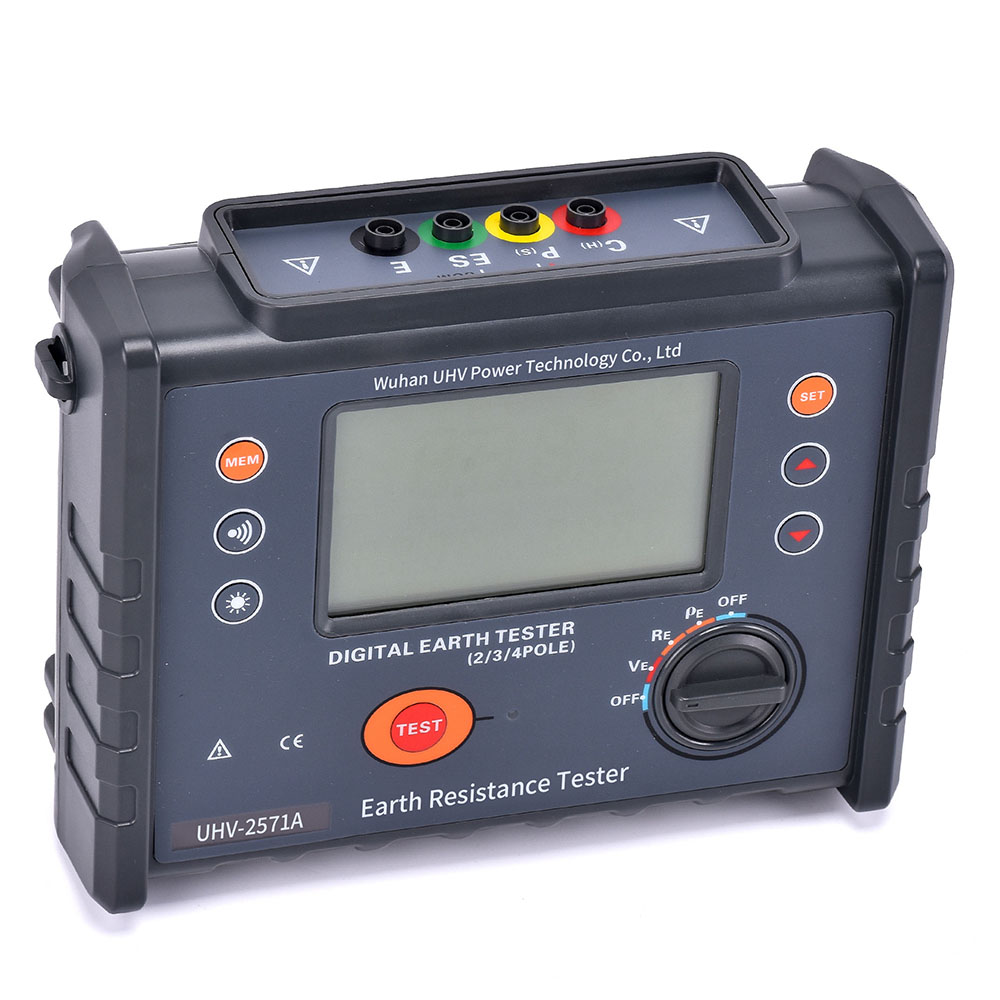
What is a digital grounding resistance measuring instrument?
Simply put, a digital grounding resistance meter is an electronic instrument used to measure the grounding resistance of a grounding device. It calculates the value of the grounding resistance by injecting a certain frequency and amplitude of current into the grounding body and measuring the resulting voltage drop. Compared to traditional analog measuring instruments, digital instruments have the advantages of intuitive reading, high accuracy, and strong anti-interference ability, making them more popular in practical applications.
The 'behind the scenes' driving force that affects grounding resistance
To accurately measure grounding resistance, understanding the factors that affect it is the first step. These 'behind the scenes drivers' mainly include:
Soil resistivity: This is the most important factor. The humidity, composition (such as salt content and organic matter content), and temperature of soil directly affect its electrical resistivity, which in turn affects the grounding resistance.
The structure of the grounding body itself: the size, shape, burial depth, and material of the grounding body will all affect the grounding resistance. For example, the larger the shape and area of the grounding grid, the smaller the grounding resistance is usually.
Environmental factors such as seasonal changes (drought, rainy season) and soil freezing can significantly alter soil resistivity.
The contact condition between the grounding body and the soil: If the grounding body has poor contact with the soil, such as corrosion or isolation by filling materials, it will also increase the grounding resistance.
A powerful tool for measuring grounding resistance
With the support of professional forces such as Wuhan UHV Power Technology Co., Ltd., numerous high-performance digital grounding resistance measuring instruments have emerged on the market. These devices typically have the following characteristics:
High precision measurement: capable of precision to the milliohm level, meeting various demanding measurement requirements.
Wide range: Suitable for different types of grounding systems, whether it is small substations or large power plants.
Easy to operate: adopting a human-computer interaction interface, the operation process is clear and concise, even first-time users can quickly get started.
Strong anti-interference ability: able to work stably in complex electromagnetic environments, ensuring the accuracy of measurement data.
How can we do better?
In order to maximize the effectiveness of the digital grounding resistance measuring instrument and ensure the safe operation of the power system, we can start from the following aspects:
Choose the appropriate measurement method: Based on the actual situation, choose measurement methods such as three wire method and four wire method to minimize the influence of auxiliary grounding resistance and lead resistance.
Regular calibration and maintenance: Ensuring the accuracy of measuring instruments, regular inspection and calibration are crucial.
Pay attention to environmental changes: Measure under different seasons or weather conditions to comprehensively understand the performance fluctuations of the grounding system.
Combining professional knowledge: The experience and technical guidance of professional institutions such as Wuhan UHV Power Technology Co., Ltd. can help us better understand measurement data and develop more effective maintenance strategies.
Extended reading: Relevant knowledge of grounding resistance measurement
Grounding resistance and system safety: The size of grounding resistance directly affects the safety and stability of the power system. Excessive grounding resistance may result in ineffective discharge of fault current to ground, leading to equipment damage or personal electric shock accidents.
The common unit of grounding resistance is ohms (Ω).
How to optimize grounding resistance: grounding resistance can be reduced by increasing the number of grounding bodies, improving soil resistivity (such as adding resistance reducing agents), adjusting the burial method of grounding bodies, and other methods.
FAQ
Q: What are the main factors affecting the accuracy of digital grounding resistance measuring instruments? Answer: It is mainly affected by soil resistivity, grounding structure, performance of the instrument itself, and the degree of standardization of the operator.
Q: Why is the multi line method needed for measurement? Answer: The multi wire method (such as the three wire method and the four wire method) can effectively eliminate the interference of auxiliary grounding resistance and lead resistance on the measurement results, and improve the measurement accuracy.
Q: How to reduce grounding resistance? Answer: Grounding resistance can be reduced by increasing the number of grounding bodies, using longer grounding bodies, and improving soil resistivity (such as increasing humidity or adding resistance reducing agents).
Q: How often should a digital grounding resistance measuring instrument be calibrated? Answer: It is recommended to calibrate at least once a year according to the recommendations of the instrument manufacturer and relevant national standards.
Q: What is the difference between digital grounding resistance measuring instruments and traditional analog measuring instruments? Answer: Digital measuring instruments have intuitive readings, higher accuracy, stronger anti-interference ability, and more convenient operation.